ADDENDUM 6.13.11
Due to all the chatter that has happened over my last post, please read the following addendum:
The person who originally asked me for a design did so in good faith (not a Linden). I said yes in good faith because they were a friend and also the one to ask me for the Burn2 logo (flaming hoops) and that turned out ok. It was not design-by-committee. So I said sure, despite the BurningLife experience...
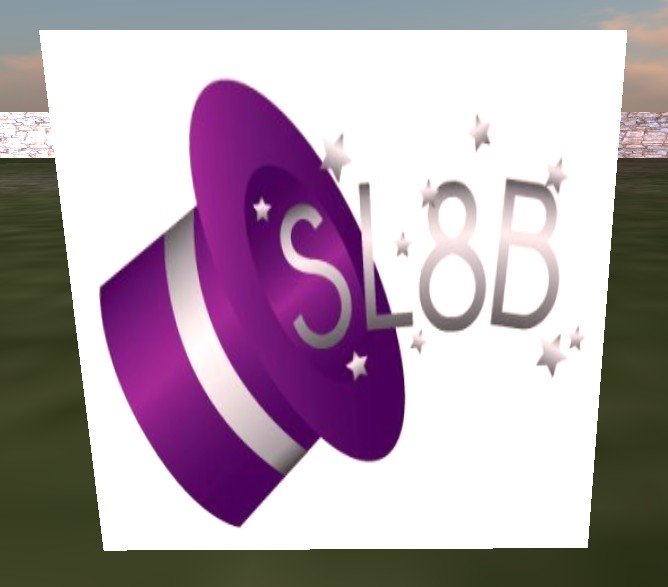
I admit that art can be influenced from a variety of sources. The logo is just different enough; I suppose also you might argue that the Hat would be a natural pairing with a theme of "magic" (as it was to me). I do remember the pitch and that Courtney Linden brought up the issue after my pitch with "I like this idea of the Hat" and then the discussion after that was about color schema as I mentioned (and my question that had to be "fed to Legal" about using The Hand).
I, not being paranoid, did not keep chat logs of course. I kept one photo of the session as a silly joke for friends ("look! I was with Lindens!"). I've been looking for the jpgs of the design but can't find them; I sent them to both Courtney and to the person who asked me to go for the design initially. I'm not sure if I have the prim mockup either; I am OCD/prim-thrifty and probably just deleted it; it was only a rough (to me) and not a sculpture I'd want to keep, especially when I heard nothing back for so long. I don't remember any "Jillian Linden" at that meeting (and I was keeping tabs because it seemed funny to me that I'd be in a meeting with Lindens!!!! lolz)
I have no intention of getting a lawyer on it because... that's just nuts. That's something a corporation would do, not me. I am neither mercenary enough nor greedy enough nor do I think that would really make a difference. I certainly did not copyright a rough design. It was an obvious lift and I had my little hissy about it. I'm not going to run to my friend who originally asked me to do the logo (who has been absent during this, engaged with a family emergency). I'm not going to go to my friends I sent the "Linden Meeting" photo to and ask them to dig through Trash for something they probably viewed as a quick joke and then tossed (and probably cleared their Trash folder like I do obsessively). I'm not going to get crazy going through my horribly-unorganized and uncategorized "SLUploads" folder looking to "prove" anything.
There was no "contract"; there were several hours of work involved in the 3D mockup, the photographing of the primset and the back-and-forth with my friend. There was one meeting I was at where I pitched the idea and an additional IM from Legal via Courtney about a week later about not using The Hand. After weeks of silence I just... blew it off. I figured they were cherrypicking for ideas and changed their minds or didn't like the proposal. I also have the experience with good professional people who actually want something done (other logo design work I have done through SL) and figured this was just another "mess by committee." If I knew in the first place I'd end up in a meeting with a couple Lindens and a bunch of other people I never would have agreed to the friend's request for a design.
I am certainly not going to go Full Metal Legal on anyone. That's a corporation thing; it is not my thing. I have ideas, and I will have more ideas. To me it was just more graphic practice. Certainly no one's going to make money off that logo (like if it was licensed for use as a cereal box or television logo) so the whole discussion about "legal copyright" and "lawyers" just hits me the wrong way and I do not plan to pursue such a course; it's ridiculous. It's in the modern area of "copyrighting concepts not executions" which I am opposed to as ruining the creative and common culture of us all. I was peeved and I had my little hissy. I'm just sorry I had it in public.
Maybe I am just lame. I never viewed such work (esp solicited by a friend, who remains a friend) as a moneymaking opportunity. I never expected to be paid. I don't plan to be a golddigger; that is not a "business model" to me. I just thought it would be a nice thing to include in my portfolio.
With the first BL logo, at least my name was included (although after the redesign I asked it not be included lol). The Burn2 logo, as far as I know, is still being used (maybe it won't be after this) which is nice, because that one didn't go through committee revision; I can point to it on my resume as a nice piece of design that I was happy with.
I was up late and in physical pain when I blogged and probably should have kept my grouse for the few friends who'd listen instead of blogging my bitchy. I was miffed about the whole business of not being able to using The Hand in a design for the Lab (which I thought would be a great thing for the Lab), the inclusion of my name under Estates/Buildouts when I had no intention of being involved in SL8B and the switch on credits for the logo but no revision of Estates/Buildouts list... but had blown it all off until someone sent me the New Logo.
At this point, it is more a caution to me about "new media" and how a minor blog like mine can repercuss and end up to be a whole bunch of trouble and that I sometimes I should keep my mouth shut and not throw a fit in public. For better or worse I had my say, and like the deleted prims I'm done with it. That doesn't mean I am unthankful for all the nice things people have been saying to me about that post and the situation.
I'd also like to clearly state that I know Linden Lab is people, not some monolith. Some of them make stupid decisions and others do nice things. As Saffia says in the comments to the previous post, some things are just cockups. My particular complaint is for a couple particular people (and Legal for just being so dense). The only Lindens I have ever met in three years were the two at that meeting and M when I did the design for his Doodle Art show (although it was only a handshake-nice-to-meetcha thing; the design was solicited by White Lebed, who did her best along with Jayjay Zifanwe to make sure my name showed on the credits, which is all I really cared about). I still like Rod ^_^
Due to all the chatter that has happened over my last post, please read the following addendum:
The person who originally asked me for a design did so in good faith (not a Linden). I said yes in good faith because they were a friend and also the one to ask me for the Burn2 logo (flaming hoops) and that turned out ok. It was not design-by-committee. So I said sure, despite the BurningLife experience...
I admit that art can be influenced from a variety of sources. The logo is just different enough; I suppose also you might argue that the Hat would be a natural pairing with a theme of "magic" (as it was to me). I do remember the pitch and that Courtney Linden brought up the issue after my pitch with "I like this idea of the Hat" and then the discussion after that was about color schema as I mentioned (and my question that had to be "fed to Legal" about using The Hand).
I, not being paranoid, did not keep chat logs of course. I kept one photo of the session as a silly joke for friends ("look! I was with Lindens!"). I've been looking for the jpgs of the design but can't find them; I sent them to both Courtney and to the person who asked me to go for the design initially. I'm not sure if I have the prim mockup either; I am OCD/prim-thrifty and probably just deleted it; it was only a rough (to me) and not a sculpture I'd want to keep, especially when I heard nothing back for so long. I don't remember any "Jillian Linden" at that meeting (and I was keeping tabs because it seemed funny to me that I'd be in a meeting with Lindens!!!! lolz)
I have no intention of getting a lawyer on it because... that's just nuts. That's something a corporation would do, not me. I am neither mercenary enough nor greedy enough nor do I think that would really make a difference. I certainly did not copyright a rough design. It was an obvious lift and I had my little hissy about it. I'm not going to run to my friend who originally asked me to do the logo (who has been absent during this, engaged with a family emergency). I'm not going to go to my friends I sent the "Linden Meeting" photo to and ask them to dig through Trash for something they probably viewed as a quick joke and then tossed (and probably cleared their Trash folder like I do obsessively). I'm not going to get crazy going through my horribly-unorganized and uncategorized "SLUploads" folder looking to "prove" anything.
There was no "contract"; there were several hours of work involved in the 3D mockup, the photographing of the primset and the back-and-forth with my friend. There was one meeting I was at where I pitched the idea and an additional IM from Legal via Courtney about a week later about not using The Hand. After weeks of silence I just... blew it off. I figured they were cherrypicking for ideas and changed their minds or didn't like the proposal. I also have the experience with good professional people who actually want something done (other logo design work I have done through SL) and figured this was just another "mess by committee." If I knew in the first place I'd end up in a meeting with a couple Lindens and a bunch of other people I never would have agreed to the friend's request for a design.
I am certainly not going to go Full Metal Legal on anyone. That's a corporation thing; it is not my thing. I have ideas, and I will have more ideas. To me it was just more graphic practice. Certainly no one's going to make money off that logo (like if it was licensed for use as a cereal box or television logo) so the whole discussion about "legal copyright" and "lawyers" just hits me the wrong way and I do not plan to pursue such a course; it's ridiculous. It's in the modern area of "copyrighting concepts not executions" which I am opposed to as ruining the creative and common culture of us all. I was peeved and I had my little hissy. I'm just sorry I had it in public.
Maybe I am just lame. I never viewed such work (esp solicited by a friend, who remains a friend) as a moneymaking opportunity. I never expected to be paid. I don't plan to be a golddigger; that is not a "business model" to me. I just thought it would be a nice thing to include in my portfolio.
With the first BL logo, at least my name was included (although after the redesign I asked it not be included lol). The Burn2 logo, as far as I know, is still being used (maybe it won't be after this) which is nice, because that one didn't go through committee revision; I can point to it on my resume as a nice piece of design that I was happy with.
I was up late and in physical pain when I blogged and probably should have kept my grouse for the few friends who'd listen instead of blogging my bitchy. I was miffed about the whole business of not being able to using The Hand in a design for the Lab (which I thought would be a great thing for the Lab), the inclusion of my name under Estates/Buildouts when I had no intention of being involved in SL8B and the switch on credits for the logo but no revision of Estates/Buildouts list... but had blown it all off until someone sent me the New Logo.
At this point, it is more a caution to me about "new media" and how a minor blog like mine can repercuss and end up to be a whole bunch of trouble and that I sometimes I should keep my mouth shut and not throw a fit in public. For better or worse I had my say, and like the deleted prims I'm done with it. That doesn't mean I am unthankful for all the nice things people have been saying to me about that post and the situation.
*-*-*-*-*-*-*-*-*-*-*-*-*
I'd also like to clearly state that I know Linden Lab is people, not some monolith. Some of them make stupid decisions and others do nice things. As Saffia says in the comments to the previous post, some things are just cockups. My particular complaint is for a couple particular people (and Legal for just being so dense). The only Lindens I have ever met in three years were the two at that meeting and M when I did the design for his Doodle Art show (although it was only a handshake-nice-to-meetcha thing; the design was solicited by White Lebed, who did her best along with Jayjay Zifanwe to make sure my name showed on the credits, which is all I really cared about). I still like Rod ^_^